2026-03-28
Chocolate That Lives with the Forest

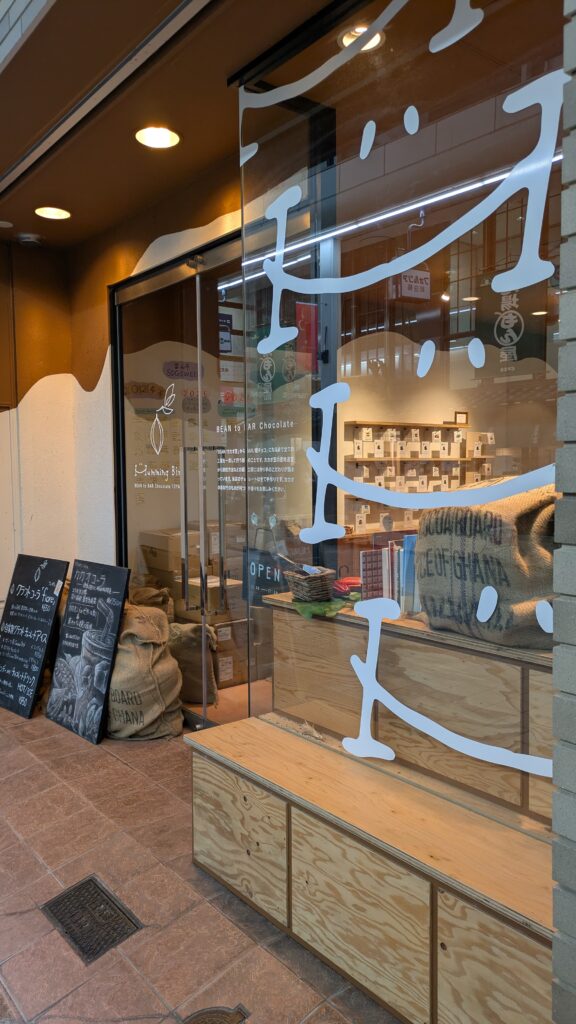
On January 31, 2026, I attended a seminar and tasting event titled “Save Cacao from Crisis! Can We Create Chocolate That’s Kind to Both People and the Planet?—Confronting Climate Change, Biodiversity Loss, and Exploitative Structures” held at Humming Bird, a specialty chocolate shop in Toyama City that carries Fair Trade cacao beans and other products. The content was very interesting, so I’ve written a report below!
1. Chocolate That Lives with the Forest
The presenter, Mr. Ezawa (Mama no Chocolate), distributes chocolate made from wild cacao harvested using local organic farming methods through a partnership with a cooperative in Ecuador, a major cacao-producing region. He shared his deep insights into cacao production. In this report, I’ll summarize the details of the organic cacao handled by Mama no Chocolate—a product that is gentle on both the forest and local farmers. To provide an overview, the key features can be summarized as follows:
- Preserving Biodiversity
- Countermeasures Against Climate Change
- Forest Conservation
- Traceability (Transparency)
- Fair Trade in Collaboration with Cooperatives
What is Agroforestry?
Simply put, agroforestry is a “natural farming method that grows crops in a forest-like environment.”
While conventional monoculture farming is efficient, it is often associated with deforestation and the loss of biodiversity.
In contrast, agroforestry allows for the maintenance of biodiversity without cutting down forests. It is also recognized as an environmentally friendly farming method because it generally has high carbon sequestration and reduces the use of pesticides.
Ecuador’s Traditional Chakra Farming
Ecuador’s Chakra is an example of traditional agroforestry practiced by Amazonian indigenous peoples and is gaining international attention as a measure against climate change. It is a farming method that combines the cultivation of staple foods, timber, fruit trees, and ornamental and medicinal plants, and has long supported local livelihoods.
Locally,
“Want to stop by my Chakra?”
seems to be a common greeting.
About Traceability
To truly preserve and expand these farming methods that coexist with the forest, it is essential to have a system that allows us to know “where, by whom, and how that cacao was produced.”
In the EU, to prevent the distribution of cocoa that contributes to deforestation, companies exporting or selling to the EU are required to ensure that cocoa can be traced back to “who produced it, when, and where.” Through such traceability systems, cocoa produced with consideration for the environment and producers is being properly valued, and a trend supporting sustainable production is beginning to emerge.
2. Chocolate Tasting
During and at the end of the seminar, we had a tasting session featuring four types of chocolate from Mamano. The event involved tasting the chocolates first, predicting which was which, and then checking our answers. At first, I thought it would be difficult, but because I could clearly identify the product names and characteristics through the taste, I was able to get all the answers correct.
Below are the four types I had the opportunity to taste.
Chocolates Tasted
- 70% Fully Ripened Cacao (Medium Roast, Crunchy Ver.)
- 70% Fruit Cacao (Light Roast, Crunchy Version)
- 58% Amazon Vanilla Milk (Smooth Amazon Arriba version)
- 70% Legendary Wild White Cacao (Smooth Version)
It was the first time in my life I’d eaten chocolate made from wild cacao, so I was truly moved. I also discovered that all four varieties had unique and incredibly rich flavors. I highly recommend them.
Click here for more details
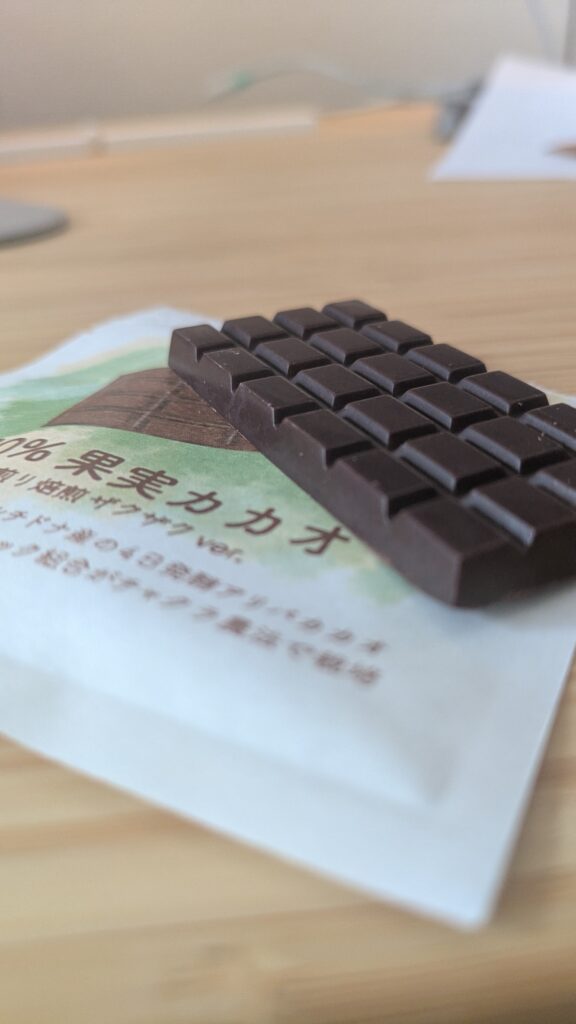
My personal favorite is the 70% Fruit Cacao (Light Roast, Crunchy Version), which is characterized by its fruity flavor, crunchy texture, and deep richness (likely due to fermentation). I suspect everyone’s preference will vary, so I recommend trying them all!
Summary
It wasn’t just delicious—learning about agroforestry and the “Chakra” farming method, which is gentle on both the natural environment and working conditions, completely changed how I view chocolate. It was a day that made me feel that society would become even richer if systems that improve the environment—such as the relationship between agriculture and forest conservation—gained more recognition and spread further. Since I couldn’t cover everything in this article, please check their website or search online for more detailed information.